Is secondary school the same as high school?

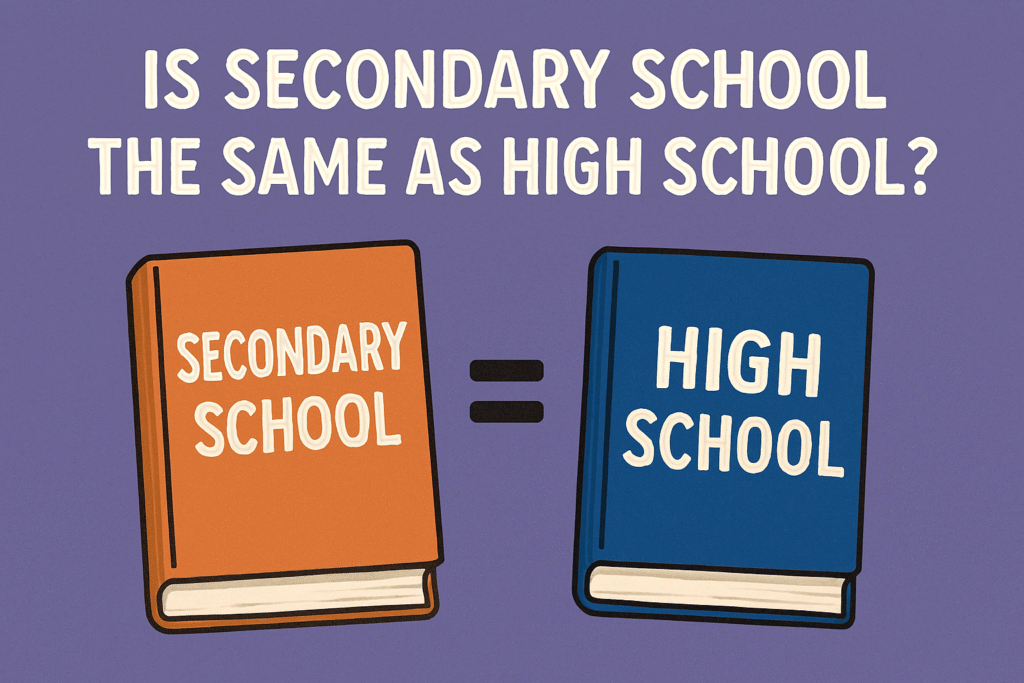
When people talk about their education, the terminology can get confusing pretty quickly. You’ll hear some folks mention “secondary school” while others talk about “high school,” and it’s natural to wonder if they’re referring to the same thing. The short answer is: mostly yes, but not always. The relationship between these two terms depends heavily on where you live, and understanding the difference can help clarify educational pathways in different countries.
The confusion exists because English-speaking countries use these terms differently. In the United States and a few other places, “high school” is the standard term for those final years of compulsory education. Meanwhile, in the United Kingdom, Australia, New Zealand, and many other Commonwealth nations, “secondary school” is the preferred terminology. But here’s where it gets interesting—these terms don’t always describe identical educational systems, even when they’re technically referring to the same general period of schooling.
Let’s dig into what makes these terms both similar and different, and why it matters whether you’re a student, parent, or simply curious about how education works around the world.
The American High School System
In the United States, high school typically refers to grades 9 through 12, encompassing students aged approximately 14 to 18 years old. This four-year program is considered the standard structure across most American states, though some variations exist. High school is compulsory in most states until a certain age, usually 16 or 17, and it serves as the gateway to college or vocational training.
The American high school experience emphasizes a broad curriculum that includes English, mathematics, sciences, social studies, and electives. Students often have considerable freedom in choosing their courses after meeting core requirements. This flexibility allows them to explore different subjects and develop specific interests before heading to higher education.
High school in America is also known for its extracurricular activities. Sports programs, clubs, debate teams, student government, and other activities are integral to the high school experience. Many colleges consider participation in these activities when evaluating applicants, so they’re not just for fun—they’re seen as an important part of education.
Secondary School in the UK and Commonwealth Nations
In the United Kingdom, secondary school encompasses a longer period than American high school. It typically includes students from ages 11 to 18, spanning seven years. This starts with secondary school at age 11 and continues through what’s often called “sixth form” or “further education” years for those aged 16 to 18.
The British secondary school system traditionally has two key testing periods. At age 14, students take GCSEs (General Certificates of Secondary Education), which are standardized examinations in various subjects. Those who continue past age 16 can pursue A-levels (Advanced levels) or other qualifications during their final two years, which are sometimes called upper sixth or sixth form.
Australia and New Zealand follow similar structures to the UK, though with some local variations. In Australia, secondary school runs from around age 12 to 18, with students taking state-based examinations rather than the British GCSE and A-level system. The exact years and terminology can vary between Australian states, making it somewhat complex even within the country itself.
Key Differences Between Secondary and High School Systems
While secondary school and high school serve similar purposes, several meaningful differences separate these systems:
Age Range and Duration: American high school is typically four years (grades 9-12), while UK secondary school encompasses seven years (ages 11-18). This means students in secondary systems spend more years in the institution, which can affect the depth of specialization and how they’re tracked through different educational levels.
Specialization and Subject Choice: The British secondary system places greater emphasis on specialization at younger ages. Students must choose specific subjects at age 14 for GCSE exams, and those choices narrow further for A-levels. American high school allows more exploration across disciplines throughout all four years.
Examination Systems: High schools typically rely on a combination of continuous assessment, grade-based reporting, and standardized tests like the SAT or ACT for college admission. Secondary schools in the UK use major standardized exams (GCSE, A-levels) that significantly impact academic records and university applications.
Extracurricular Culture: While American high schools are known for robust sports and club programs, these activities are less central to secondary school cultures in the UK and Commonwealth nations, though they still exist.
Other International Perspectives
Beyond the US and UK, other countries use their own terminology. In Canada, the term “secondary school” is standard, though “high school” is also used colloquially. Their system is more similar to the American model in structure. In many European countries, terms like “gymnasium” (Germany) or “lycée” (France) are used instead, reflecting different educational structures entirely.
Japan uses “lower secondary school” and “upper secondary school,” while India uses terms like “secondary” and “higher secondary.” These variations remind us that education terminology is highly localized and often reflects the unique history and structure of each nation’s education system.
Why the Terminology Matters
Understanding whether someone is referring to secondary school or high school becomes important in several practical contexts. If you’re considering international universities, knowing these distinctions helps you understand different qualification systems. For parents navigating education choices, the terminology often reflects differences in how students are assessed and tracked.
The terminology also matters for admissions. An American student applying to a British university needs to understand that their high school transcript won’t directly translate to the British system’s standards. Similarly, a British student with A-levels needs to understand how American universities interpret their qualifications.
Making the Connection
Despite their differences, secondary school and high school are fundamentally addressing the same educational purpose: preparing young people for adulthood and further education. Whether a school is called secondary or high school, it’s still a place where teenagers develop academic skills, explore interests, build relationships, and prepare for their futures.
The confusion between these terms is completely understandable given how differently English-speaking countries have organized their education systems. What matters most is understanding the specific requirements, structure, and expectations of the particular system you’re navigating.
Final Thoughts
So, are secondary school and high school the same? They’re close enough in purpose that many people use the terms interchangeably, but they’re different enough that the distinction matters in important contexts. Secondary school typically refers to a longer, more structured system with greater emphasis on specialization, while high school usually describes a four-year American system with broader elective choice and stronger extracurricular traditions.
Rather than seeing one as superior, it’s better to recognize that both systems have thoughtfully evolved to meet their societies’ educational needs. Whether you’re in secondary school or high school, the ultimate goal remains the same: gaining knowledge, developing skills, and preparing for whatever comes next. Knowing which term applies to your situation—and what it actually means in your country—is the key to navigating your education confidently.
Secondary School vs High School
Secondary school and high school are related but not exactly the same in all educational systems.
In the United States
High school typically refers to grades 9-12 (ages 14-18) and is considered part of secondary education. Secondary school is a broader term that encompasses all education after primary school, including middle school (grades 6-8) and high school.
In the United Kingdom
Secondary school generally covers ages 11-18 (years 7-13) and includes what Americans would call both middle and high school. High school is not commonly used as an official term in the UK system.
In Other Countries
The terminology varies significantly. In many Commonwealth nations, secondary school is the umbrella term for post-primary education. Some countries divide secondary education into lower secondary and upper secondary levels, where upper secondary may be more equivalent to American high school.
Key Differences
- Scope: Secondary school is the broader category; high school is more specific
- Grade levels: Secondary school typically spans more years than high school alone
- Regional usage: High school is primarily American terminology; secondary school is more universal
- Age range: Secondary school covers ages 11-18 in many systems; high school typically covers ages 14-18
Conclusion
In the US context, high school is a component of secondary education. Globally, secondary school is the broader term that may or may not align exactly with what Americans call high school, depending on the country’s educational structure.

Related Articles