How can I encourage independence in my primary schooler?

Watching your child grow up comes with a mix of emotions. You want to keep them safe, but you also need to let them spread their wings. The truth is, fostering independence in your primary schooler is one of the most valuable gifts you can give them. Children who develop a genuine sense of autonomy tend to be more confident, resilient, and better equipped to handle life’s challenges as they grow older.
Independence doesn’t mean leaving your child to figure everything out alone. Rather, it’s about gradually shifting from doing things for them to guiding them through doing things themselves. The goal is to create an environment where they feel supported while learning to trust their own abilities. This process looks different for every family, but the principles remain the same across most households.
If you’re wondering where to start, you’re not alone. Many parents struggle with finding the right balance between offering help and stepping back. The good news is that there are proven strategies that work, and they often require less effort than you might expect.
Understanding Why Independence Matters
Before diving into the how, it’s worth understanding the why. Children who develop independence from a young age typically show stronger problem-solving skills, better emotional regulation, and increased self-esteem. They’re also less likely to become overly dependent on parents or peers for validation and decision-making.
When children are given opportunities to do things themselves, even small tasks, their brain develops in important ways. They begin to understand cause and effect, learn from mistakes without fear, and develop a growth mindset. A child who makes their own lunch (with supervision) learns not just how to assemble ingredients, but also gains confidence in their ability to complete a task from start to finish.
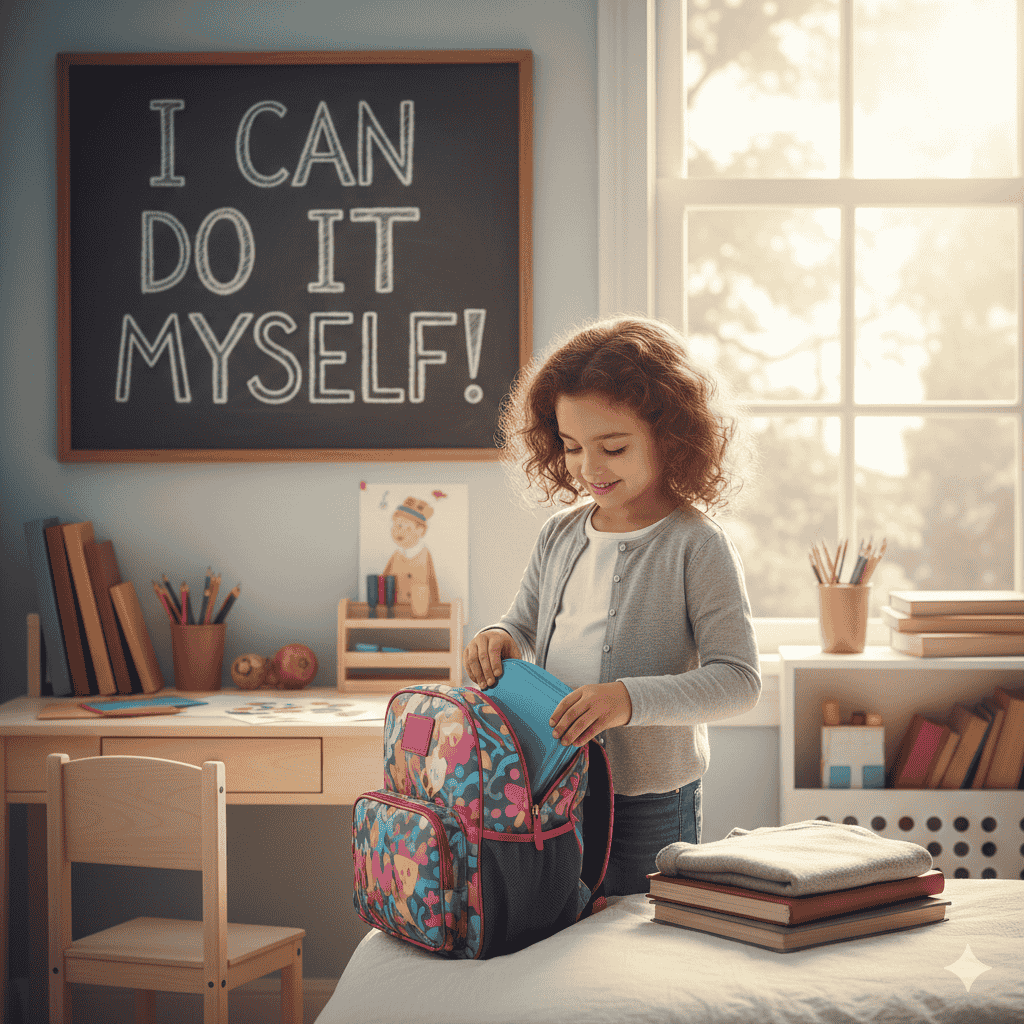
The foundation you build during primary school years sets the stage for everything that comes later. A seven-year-old who learns to organize their own schoolbag is already developing executive function skills they’ll need in secondary school. An eight-year-old who helps make decisions about their own bedtime routine is learning self-regulation.
Start with Self-Care Routines
One of the easiest places to encourage independence is through daily self-care routines. These are tasks your child likely already does, but perhaps with significant parental involvement. The key is to gradually hand over responsibility while remaining available for guidance.
Getting ready in the morning is a perfect starting point. Instead of laying out clothes for your child, ask them to choose from appropriate options. Start by narrowing it down—”Would you like the blue shirt or the red one?”—then gradually expand their choices. The same applies to grooming: rather than reminding them repeatedly to brush their teeth, create a simple checklist they can follow independently.
Most primary schoolers can handle bathing and basic hygiene with minimal supervision by age seven or eight. The key is establishing clear expectations. Walk through the process together a few times, then let them take the lead while you check in periodically. You might be surprised how capable they are when given the chance.
Getting dressed and preparing for bed can also become independent tasks. Make sure clothes are stored where your child can reach them. Use visual aids if needed—pictures showing appropriate weather-appropriate clothing can help younger primary schoolers make sensible choices.
Involve Them in Household Responsibilities
Children are far more capable than we often give them credit for. Assigning age-appropriate chores not only teaches responsibility but also demonstrates that they’re trusted members of the household. This significantly boosts independence and self-worth.
For six to eight-year-olds, simple tasks work best: feeding a pet, wiping down a table, putting toys away, or matching socks. These should take five to ten minutes and require minimal supervision. The goal isn’t perfection; it’s participation and learning.
As children move through primary school, their capabilities expand. An eight or nine-year-old can handle more complex tasks like loading a dishwasher, taking out lightweight trash, sorting laundry, or helping with meal preparation. They might need reminders and occasional redirection, but that’s part of the learning process.
The way you approach chores matters tremendously. If you assign a task and then immediately redo it because they didn’t do it quite right, you’re sending the message that their effort isn’t good enough. Instead, praise their efforts and offer gentle guidance for improvement next time. A slightly imperfect job done independently is far more valuable than a perfect job completed by you.
Allow Them to Make Decisions
Decision-making is a skill, and like any skill, it develops through practice. Start by offering your child choices within boundaries you’ve set. This approach gives them autonomy while keeping them safe and on track.
Let them choose what to wear (from appropriate options), what activity to do during free time, or what healthy snack to eat. In school-related matters, involve them in decisions about which sport or club to join, or how to handle a social problem with a peer. Your role is to listen, ask guiding questions, and help them think through consequences.
When your child makes a decision that results in a natural consequence, resist the urge to rescue them immediately. If they forget their water bottle and feel thirsty during sports practice, they learn to remember it next time. If they choose a book that turns out to be too difficult, they discover that some choices lead to disappointment—and they can make different choices in the future. These small learning moments build confidence and wisdom far more effectively than warnings ever could.
Create a Culture of Problem-Solving
Instead of jumping in to fix every problem, teach your child to think through solutions. When they come to you frustrated because they can’t find something, ask, “Where do you think it might be? Let’s check there together.” When they disagree with a friend, help them brainstorm solutions rather than intervening directly.
This doesn’t mean leaving them to struggle alone. It means asking questions that prompt thinking: “What do you think happened?” “How could you handle this differently?” “What might happen if you tried that?” These questions empower children to develop their own solutions and trust their judgment.
Over time, you’ll notice your child running through this problem-solving process independently, often talking themselves through challenges out loud. This is a sign that the skill is taking root.
Manage School-Related Tasks
As your child progresses through primary school, gradually handing over responsibility for homework and school organization becomes important. This doesn’t mean abandoning them—it means changing your role.
Instead of managing their backpack, help them create a system they can manage themselves. A checklist of what goes in the bag, kept somewhere visible, can work wonders. Rather than asking whether they’ve done their homework, establish a consistent time and place for it, then let them take the lead in completing it. Your job becomes observing and offering support when genuinely needed, not hovering.
If your child consistently forgets homework or loses permission slips, resist the urge to fix it for them. Instead, let them experience the natural consequences—a gentle reminder from their teacher, or needing to redo work. These experiences teach accountability far more effectively than parental rescue missions.
Encourage Outdoor Independence
As they get older, primary schoolers benefit greatly from unsupervised outdoor time. This might mean playing in the backyard alone, walking to a nearby friend’s house, or riding bikes in the neighborhood. These experiences build confidence, develop judgment, and allow children to engage with a world that isn’t carefully managed by adults.
The level of independence depends on your neighborhood and your child’s maturity level, but even small steps count. A ten-year-old who plays in the backyard for thirty minutes without you watching builds different skills than one who never leaves your sight.
Knowing When to Step In
Encouraging independence doesn’t mean complete hands-off parenting. You’re still their parent and safety guide. If something is genuinely unsafe or if they’re truly struggling despite genuine effort, stepping in makes sense. The balance involves recognizing the difference between a challenge that builds character and a situation where they need help.
Your presence, even in the background, matters tremendously. Being available when they truly need you—not intrusive, but present—creates the security that allows children to take healthy risks.
Building Independence Takes Time
Remember that independence develops gradually. Your six-year-old will need far more guidance than your ten-year-old, and that’s perfectly normal. Small, consistent steps matter far more than dramatic changes. When you give your child regular opportunities to do things themselves, make decisions, solve problems, and experience consequences, you’re building a foundation of confidence and capability that will serve them throughout their lives. This is ultimately what independence is about: helping your child become a capable, confident person who trusts themselves to handle what comes their way.
How to Encourage Independence in Your Primary Schooler
Self-Care Skills
- Allow your child to dress themselves, even if it takes longer
- Let them brush their teeth and wash hands without constant supervision
- Encourage them to prepare simple snacks or pour their own drinks
- Have them pack their own backpack with a checklist for reference
Household Responsibilities
- Assign age-appropriate chores like tidying toys, loading the dishwasher, or wiping spills
- Create a chore chart with clear expectations
- Allow natural consequences when tasks aren’t completed
- Praise effort and improvement, not just perfection
Decision-Making Opportunities
- Offer limited choices (two or three options) in daily activities
- Let them decide what to wear from acceptable options
- Allow input on menu planning or activity selection
- Ask for their opinion on solving simple problems
Academic Independence
- Create a homework routine they follow with minimal reminders
- Encourage them to use resources (dictionary, calculator) to find answers
- Let them organize their schoolwork and materials
- Have them check their own work before submission
Problem-Solving Skills
- Avoid immediately solving every problem they encounter
- Ask guiding questions like “What could you try?” or “How might you handle this?”
- Let them experience manageable failures and learn from mistakes
- Support without controlling the solution process
Physical Independence
- Allow supervised outdoor play and exploration
- Let them walk to a nearby location if age-appropriate and safe
- Encourage trying new physical activities independently
- Permit reasonable risk-taking within safe boundaries
Emotional Support
- Validate their feelings while encouraging resilience
- Use phrases like “I know this is hard, but I believe you can try”
- Celebrate attempts, not just successes
- Maintain patience during the learning process

Related Articles