Do primary schools focus more on foundational skills than elementary schools?

When parents start thinking about their child’s education, they often encounter confusing terminology. The terms “primary school” and “elementary school” are frequently used interchangeably, yet they can represent different educational stages depending on where you live. This distinction matters because it affects how foundational skills are taught and prioritized. Understanding the differences between these educational levels helps parents make informed decisions about their child’s learning journey and what to expect at each stage.
The short answer is that primary schools and elementary schools don’t differ significantly in their focus on foundational skills—they’re often the same thing. However, the way foundational skills are approached, emphasized, and developed can vary considerably based on school systems, regional standards, and individual school philosophies. By exploring what “foundational skills” really means and how different educational structures address them, we can better understand what matters most for young learners.
Primary and Elementary Schools
The terminology around early childhood education varies globally. In many English-speaking countries, “primary school” is the standard term used to describe the first formal years of education, typically spanning ages 5 to 11. In the United States and some other regions, “elementary school” serves the same purpose, covering roughly kindergarten through fifth or sixth grade.
Some education systems, however, divide these years differently. In certain areas, “primary school” might refer only to the youngest children (ages 5 to 7), while “elementary school” covers the later primary years (ages 7 to 11). Understanding your local education system’s definitions is crucial before comparing their approaches to foundational skills.
What both primary and elementary schools share is their fundamental purpose: establishing the educational foundation that supports all future learning. Whether your child attends a “primary” or “elementary” program, teachers are working toward similar core objectives during these critical years.
What Are Foundational Skills?
Foundational skills are the core competencies that children need to build everything else upon. These aren’t just academic; they’re multifaceted and essential for lifelong learning. Understanding what constitutes foundational skills helps clarify whether different school types actually prioritize them differently.
Literacy and numeracy form the backbone of academic foundational skills. Children learn to recognize letters, blend sounds into words, decode text, and eventually read fluently. Numeracy involves understanding number concepts, counting, basic arithmetic, and early problem-solving. These skills are universally recognized as non-negotiable in any quality primary or elementary program.
Social-emotional skills have gained increasing importance in recent years. Schools now intentionally teach children how to recognize emotions, manage frustration, cooperate with peers, and resolve conflicts. These abilities directly impact classroom behavior and readiness to learn, making them foundational in a broader sense than purely academic subjects.
Physical and motor skills also matter significantly. Fine motor development (like pencil grip and hand-eye coordination) and gross motor skills (running, jumping, balance) support learning in multiple ways. Children who can hold a pencil comfortably can write more effectively, and those with strong core muscles sit better during lessons.
Executive function skills represent another critical foundational area. These include attention span, following directions, organizing materials, and planning simple tasks. Young children develop these capabilities gradually throughout primary and elementary years.
Foundational Skills Across Different Educational Models
Both primary and elementary schools emphasize foundational skills, but the intensity and approach can differ based on school philosophy and curriculum standards. Traditional structured primary schools often take a more formal, direct instruction approach to literacy and numeracy. Children might spend dedicated time on phonics lessons, guided reading groups, and scaffolded math instruction.
Progressive or play-based primary schools might weave these same foundational skills into project-based learning and hands-on activities. Children still learn phonics and counting, but the instruction integrates into meaningful contexts—reading recipes for cooking projects, counting money for a classroom store, or writing notes to family members.
Elementary schools in the United States typically follow state-mandated curriculum standards, which have become increasingly rigorous over the past two decades. Most elementary programs now emphasize phonics-based reading instruction and conceptual understanding in mathematics earlier than previous generations experienced. Younger elementary students (K-2) spend substantial time on reading and math, with social studies and science receiving somewhat less focus.
The Role of Play in Foundational Skill Development
One significant consideration when comparing primary and elementary approaches to foundational skills is the role of play. Younger primary school children, particularly those in reception or kindergarten, often spend more time in play-based learning than slightly older elementary students.
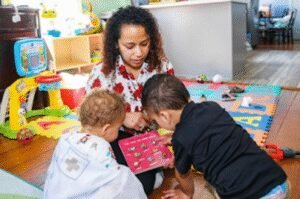
Research consistently shows that play is not frivolous—it’s actually foundational skill development in disguise. When children build with blocks, they’re developing spatial reasoning and problem-solving abilities. Pretend play develops language, social skills, and emotional regulation. Games teach turn-taking, following rules, and managing both winning and losing.
Some education systems recognize this by dedicating significant classroom time to guided play and exploration in the youngest primary years, then gradually shifting toward more structured academic instruction as children mature. Other systems maintain pressure for earlier academic achievement across all primary grades, potentially reducing play opportunities even for the youngest learners.
Assessment Approaches and Skill Development
How schools assess foundational skills reveals much about their priorities. Schools that emphasize foundational skills typically use ongoing, formative assessment rather than relying solely on standardized tests with young children.
Teachers in quality primary and elementary programs observe children during learning activities, keep work samples, and document progress informally. This allows them to identify which children are developing skills as expected and which need additional support or challenge. Such individualized attention to foundational skill development is particularly important because children develop at different rates.
Some elementary schools now use systematic phonics assessments and math fact fluency checks to ensure all students build necessary foundational literacy and numeracy skills. While this systematic approach can be effective, critics worry that over-testing young children creates stress and narrows the curriculum at the expense of other important foundational areas like creativity and critical thinking.
Quality Differences Within Educational Levels
Here’s an important reality: variation within primary or elementary schools is often greater than variation between them. A highly rigorous primary school in one district might emphasize foundational skills more intensively than a less structured elementary school across town, even if the children are the same age.
Teacher training, school leadership, parental expectations, and available resources all influence how foundational skills get prioritized. A primary school with well-trained teachers, strong phonics instruction, and supportive parents who read with their children might produce better readers than an elementary school with less training and fewer resources, even if the elementary setting emphasizes reading.
This means parents shouldn’t assume that choosing “elementary” over “primary” or vice versa determines how well their child will develop foundational skills. The specific school’s approach, teachers’ expertise, and family support matter much more than the institutional name.
Creating Strong Foundations at Home
Regardless of whether your child attends primary or elementary school, parent engagement significantly impacts foundational skill development. Schools can’t do this work alone. Children who are read to regularly, who see adults modeling literacy, and who have conversations about topics they’re curious about develop stronger foundational skills.
Supporting foundational skill development at home means reading together daily, playing games that involve counting or strategy, encouraging writing through birthday cards or thank-you notes, and creating space for unstructured play. It means talking with your child about their day and their feelings, which supports social-emotional foundational skills. These simple practices complement whatever approach your child’s school uses.
Conclusion
The question of whether primary schools focus more on foundational skills than elementary schools isn’t really about the name of the institution—it’s about recognizing that young children universally need strong foundations in literacy, numeracy, social-emotional skills, physical development, and executive function, regardless of what their school is called. Both primary and elementary schools share this goal, though they may implement it differently based on their philosophies, curricula, and resources.
What matters most is ensuring that whatever educational setting your child attends prioritizes foundational skills with intentionality and care. Look for schools where teachers assess individual progress, where learning includes both structured instruction and play, and where there’s clear communication between home and school. The most important factor isn’t whether you choose a primary or elementary program, but rather finding one where educators understand the critical importance of these early years and dedicate themselves to helping every child build the strong foundation necessary for future success.
Primary Schools vs Elementary Schools: Focus on Foundational Skills
Definition and Scope
Primary Schools typically refer to the early years of formal education, generally covering ages 4-11 (Reception through Year 6 in the UK system) or kindergarten through Grade 5 in the US.
Elementary Schools in American English typically encompasses grades K-5 or K-6, which is essentially equivalent to primary school.
Foundational Skills Focus
Both primary and elementary schools place similar emphasis on foundational skills, including:
- Literacy skills: phonics, reading comprehension, writing, spelling
- Numeracy skills: basic arithmetic, number recognition, mathematical concepts
- Communication: speaking, listening, and language development
- Social and emotional development: cooperation, empathy, emotional regulation
- Motor skills: fine and gross motor development
- Problem-solving: critical thinking and reasoning
Key Distinctions
In regions where both terms are used differently:
- Primary schools may focus slightly more on play-based learning and early childhood development, particularly in Reception/Kindergarten years
- Elementary schools (especially in upper grades) may begin introducing more structured subject-specific instruction
- Primary schools in some international contexts place greater emphasis on foundational literacy and numeracy before transitioning to secondary education
Conclusion
The distinction is largely terminology-based rather than pedagogically significant. Both are foundational stages of education with comparable emphasis on core skills development.

Related Articles