
What subjects do children typically learn in primary school, especially in a standard international or national curriculum, and how do these core subjects like mathematics, language arts, science, and social studies build a foundational understanding for young learners aged 6 to 12? Are there variations in curriculum focus or additional subjects like art, music, physical education, or foreign languages that are commonly included at this educational stage?
Children in primary school typically learn a range of foundational subjects to develop core knowledge, skills, and understanding. While specific curricula vary by country and education system, common subjects include:
-
Language Arts (or English):
- Reading: Phonemic awareness, phonics, fluency, vocabulary development, comprehension strategies, genre study (fiction, non-fiction, poetry).
- Writing: Handwriting (d’nealian, cursive – depending on region/year), spelling, grammar, punctuation, sentence structure, paragraph structure, different writing genres (narrative, expository, persuasive, creative), research skills.
- Speaking & Listening: Oral presentation, discussion skills, active listening, following instructions, expressing ideas clearly, performing drama/poetry.
- Literature: Exposure to a wide range of age-appropriate books, stories, poems, and drama.
-
Mathematics:
- Number Sense: Counting, place value, whole numbers, integers, fractions, decimals, percentages.
- Operations: Addition, subtraction, multiplication, division (including different strategies and fluency).
- Algebraic Thinking: Patterns, functions, equations, inequalities, variables, expressions.
- Geometry: Shapes (2D and 3D), spatial relationships, properties of shapes (symmetry, angles), perimeter, area, volume, transformations.
- Measurement: Length, mass, capacity, time, temperature, using standard and non-standard units, estimation.
- Data Analysis & Probability: Collecting data, organizing data (tables, charts, graphs – pictographs, bar graphs, line plots), interpreting data, basic probability concepts.
- Problem Solving & Reasoning: Applying mathematical knowledge to solve real-world and abstract problems, logical thinking, justifying solutions.
-
Science:
- Life Sciences: Plants and animals, habitats, ecosystems, food chains, human body (anatomy, health, nutrition), life cycles, classification, adaptation, biodiversity.
- Physical Sciences: Properties of matter (solids, liquids, gases), states of matter, changes (physical/chemical), forces and motion (gravity, friction, magnets), simple machines, energy (light, heat, sound, electricity).
- Earth & Space Sciences: Rocks and minerals, soil, weather, water cycle, seasons, day/night, moon phases, planets, solar system, natural resources, conservation, weathering/erosion.
- Scientific Inquiry: Observation, questioning, making predictions, planning investigations, fair testing, collecting and recording data (including simple measurements), analyzing results, drawing conclusions, communicating findings.
-
Social Studies (or Humanities/History & Geography):
- History: Understanding chronology, timelines, ancient civilizations, local/regional history, national history, significant events and figures, cultural heritage, change over time.
- Geography: Map skills (reading, creating, using grids and symbols), continents, oceans, countries, regions, physical features (rivers, mountains, landforms), climate zones, natural resources, human geography (settlements, transportation, population), environmental awareness.
- Civics & Government: Rules and laws, rights and responsibilities, community helpers, local government structure, national symbols, symbols of patriotism, concepts of fairness and justice.
- Economics: Needs vs. wants, scarcity, choice, saving, spending, different types of work, goods and services, trade.
- Culture & Society: Understanding diverse cultures, traditions, celebrations, families, communities, respect for differences.
-
The Arts:
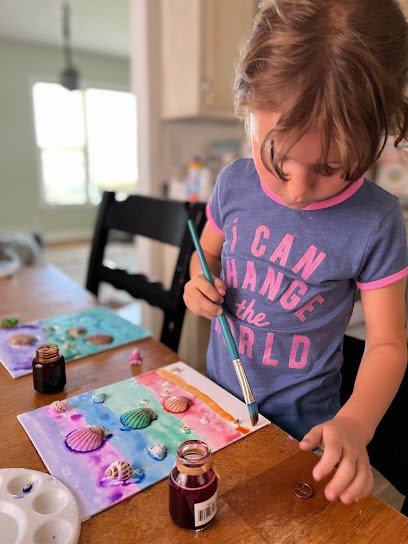
- Visual Arts: Drawing, painting, printing, sculpture (clay, paper mâché), collage, textiles, crafts, art history (looking at famous artists/works), art appreciation, elements of art (line, shape, color, texture, space), principles of design.
- Music: Singing (pitch, rhythm, harmony), playing instruments (recorders, percussion, Orff instruments), listening to music, music history/composers, movement/dance to music, improvisation, basic notation.
- Drama/Theatre: Role-play, improvisation, puppetry, mime, storytelling, performance skills, expressive movement, teamwork.
-
Physical Education (PE):
- Motor Skills: Locomotor skills (running, jumping, hopping), manipulative skills (throwing, catching, kicking, striking), stability skills (balancing, twisting).
- Games & Sports: Fundamental skills applied in team games (soccer, basketball, netball), individual sports (tennis, badminton, athletics), gymnastics, dance, swimming.
- Physical Fitness: Cardiovascular endurance, muscular strength, flexibility, stamina, understanding the importance of exercise and healthy living.
- Health & Well-being: Safety awareness, rules of games, sportsmanship, teamwork, cooperation, healthy lifestyle choices (nutrition, hygiene, rest).
-
Languages (Other than Language of Instruction):
- Increasingly common, often starting in later primary years. Focus on basic vocabulary, simple phrases, greetings, numbers, colors, songs, games, understanding basic cultural aspects.
-
Digital Literacy / Computing / Information & Communication Technology (ICT):
- Basic computer operation, keyboard/mouse skills, word processing, simple multimedia creation (presentations, drawing), safe internet practices, digital citizenship, coding fundamentals (often visual block-based programming like Scratch), research using online tools, digital safety awareness.
- Personal Development / Social & Emotional Learning (SEL) / Health Education:
- Though sometimes integrated, dedicated lessons focus on self-awareness, self-management, social awareness, relationship skills, responsible decision-making, emotional regulation, conflict resolution, anti-bullying, personal safety (stranger danger, internet safety), hygiene, puberty education (often later years), wellness concepts.
Additional subjects or topics are sometimes included depending on the school or region:
- Religious Education (RE): Studying world religions and beliefs (common in some countries like the UK, Ireland, Australia).
- Home Economics / Food Technology: Basic cooking skills, nutrition, sewing, textiles.
- Environmental Education: Integrated throughout or as a specific focus.
- Philosophy for Children (P4C): Developing critical thinking and reasoning skills through structured discussion.

Related Articles
Leave a Reply